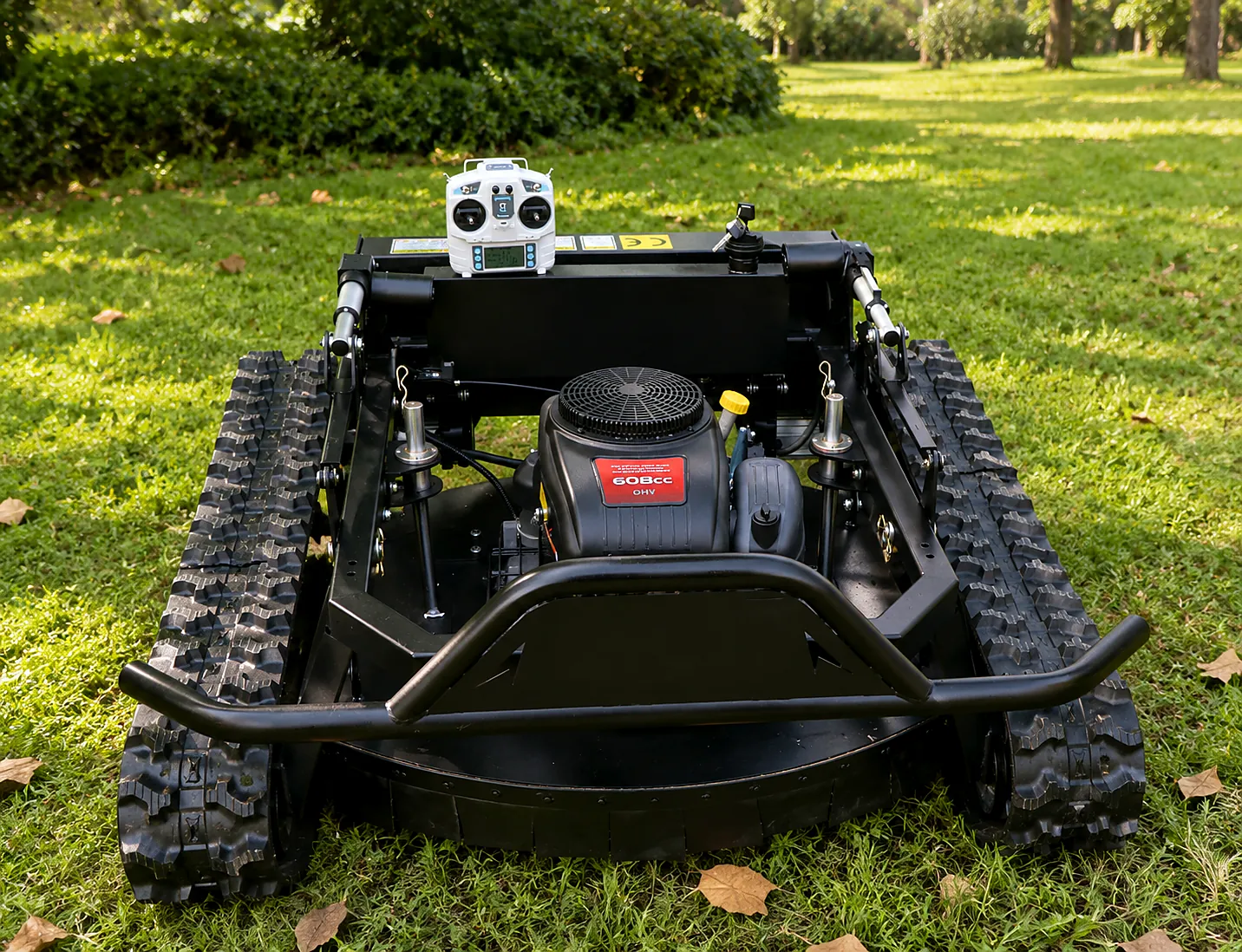
Selecting the right remote control lawn mower starts with terrain, gradient, vegetation density and access. For steep slopes, tracked traction, a low center of gravity and stable remote operation matter more than headline engine power alone. WondMower models are designed for demanding terrain, with configurations rated up to 60° depending on the model.nn## Evaluate the slope and ground conditionsnMeasure the working gradient and identify loose soil, wet grass, ruts and hidden obstacles. A tracked slope mower spreads weight across a larger contact area and can provide more predictable traction than wheels on uneven ground. Operators should always follow the model manual and conduct a site risk assessment before work.nn## Match cutting width to productivitynA 550 mm machine suits tighter access and selective vegetation management. An 800–1000 mm remote control mower covers open banks and large sites faster. Wider is not always better: transport width, turning room and ground contour should influence the final choice.nn## Compare cutting height and vegetationnFor brush, weeds and neglected land, a broad cutting-height range helps the operator approach dense growth in controlled passes. Ask the manufacturer about blade type, cutting chamber, service access and replacement parts.nn## Review remote range and supportnA practical remote working distance helps the operator stay away from the cutting deck and difficult terrain while maintaining a clear view. For B2B buyers, documentation, spare parts, packaging and after-sales response are equally important. Share your slope, vegetation and target capacity with WondMower for a suitable configuration.
Need a mower recommendation?
Tell us where the mower will be used, the mowing area, and whether you are an individual buyer or a distributor.
Email WondMower